This year, Hurricane Florence brought tragic damage to the Carolinas and the Eastern Seaboard. And like recent major storms such as Harvey and Irma, Florence has caused massive flooding throughout the region.
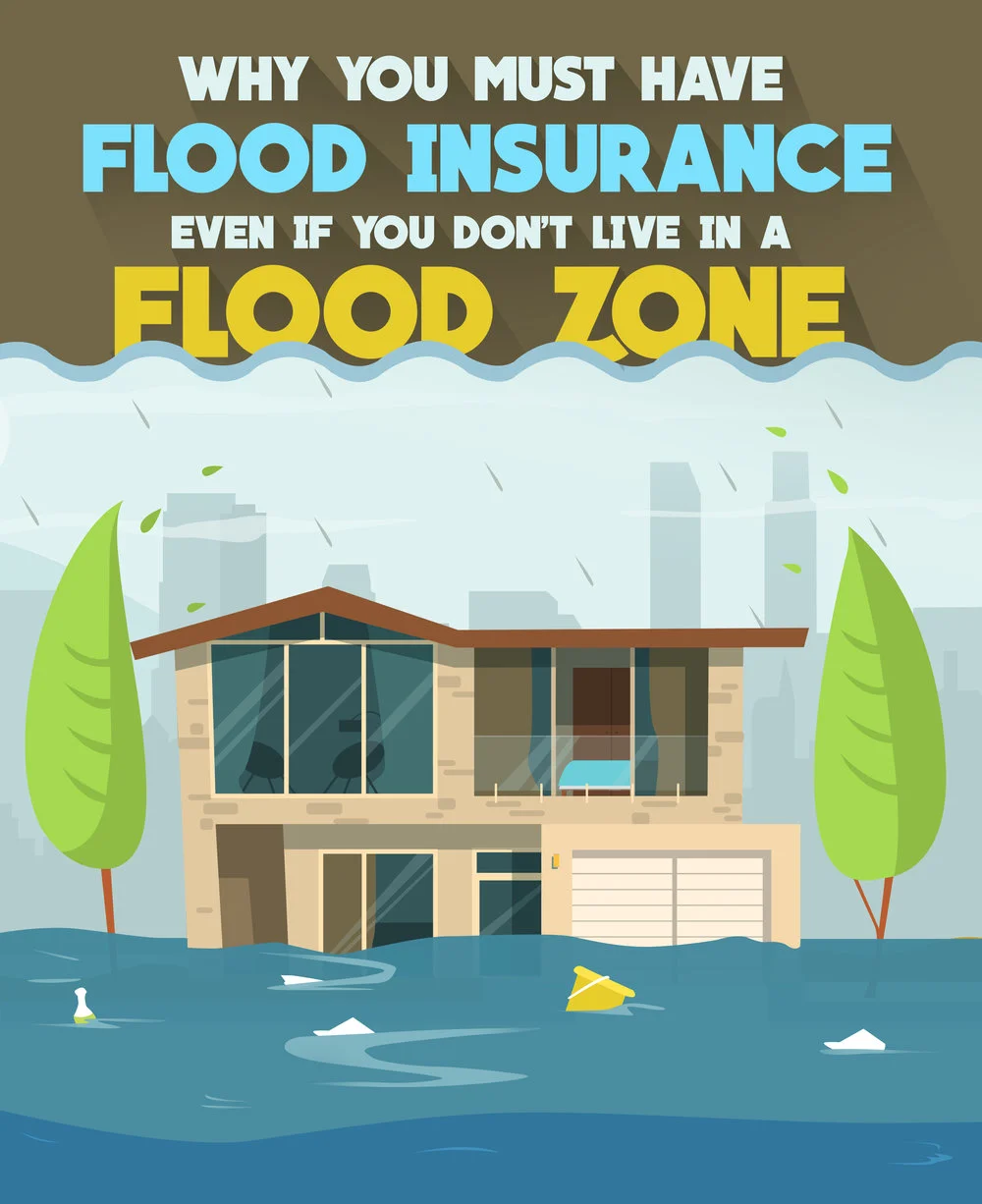
According to the Federal Emergency Management Agency (FEMA), no home is completely safe from potential flooding. And without flood insurance, homeowners have to pay out of pocket or take out loans to repair their home and replace its contents. Flood insurance can mean the difference between recovering and being financially devastated. So why risk it when your largest financial investment is at stake? It can take you less than a month to make an offer and close on your dream home, but rebuilding it after flood damage could take months or even years.
Here are five crucial reasons why homeowners should carefully consider getting flood insurance:
1. Your standard homeowner's insurance policy does not typically cover flood damage.

Many American homeowners are unaware that flooding is one type of natural disaster that isn’t covered by their standard home insurance policies. In fact, at least 43% of homeowners incorrectly believe the damage from heavy rain flooding is covered under their standard insurance, according to the 2016 Consumer Insurance Survey by the Insurance Information Institute.
Most homes in the counties that were hardest hit by Hurricane Florence in September 2018 were underprepared for the aftermath of the storm. A Washington Post analysis revealed only one in 10 homes has flood insurance.
Since your regular home insurance doesn’t typically cover flood damage, you will need a policy offered through the government’s National Flood Insurance Program (NFIP). The average annual premium for a policy through the NFIP was $866, although it is expected to rise about 8% this year. The program's maximum coverage is $250,000 for your home and $100,000 for its contents.
2. Your home can be miles away from a floodplain or any bodies of water and you can still be a victim of flooding.
It takes just one inch of water to cause $25,000 of damage to your home, as reported by FEMA. You can live miles away from water and your area may be low-risk, but it doesn’t mean there’s no risk involved. Surprisingly, over 20% of flood insurance claims come from properties outside high-risk flood zones.
While homeowners in high-risk areas are likely required by lenders to get flood insurance, it’s also recommended that those who live in low- to medium-risk areas also consider buying a policy.
3. Flood maps can change!

Here’s a sad truth: floods can happen anywhere. Floodplains and floodplain maps change and evolve. When you bought your home, you may have thought, “There’s no need for a flood insurance policy because I don’t live on a floodplain.” But that doesn’t mean your area will always be low risk.
You can check the site FloodSmart.gov to learn more about the flood risks in your area. It’s also a good tool if you want to get more information about the risks, premiums, and agents near you. Your insurance agent can also be your go-to person during your research.
4. Floods are the most common weather emergency.

Anywhere it rains, there’s the possibility of flooding. And according to FEMA, flooding can occur from hurricanes, tropical storms, cyclones, plain old heavy rains, winter storms, spring thaws, overburdened or clogged drainage systems, or occasionally from nearby construction. It doesn’t even have to be caused by a major weather emergency for your property to be affected.
Likewise, flood insurance can pay whether or not there is a Presidential Disaster Declaration.
5. There is a 30-day wait period before the policy goes into effect.

You can’t wait until a hurricane is bearing down on your area for you to get flood insurance. Most policies have a 30-day waiting period between when you buy the coverage and when the coverage takes effect. So you need to purchase a flood insurance policy at least a month in advance to be eligible for reimbursement.
The only exception to this is when the policy you got was required upon closing on a new home purchase. When an extreme storm hits your area within the 30-day period, you’ll have peace of mind that your new home and its contents are insured.
Bottom Line
Flood insurance premiums vary depending on the home’s elevation, the date of construction, and the relative risk of the area. And while the NFIP program has a maximum of $350,000 in coverage for your home and its contents, you may opt to buy excess flood insurance through a private carrier that would cover an amount above the national program’s limits.
It may be expensive, but don’t skimp on a flood policy and protect your largest financial investment. If you’ve been a victim of flood damage and your home is uninsured, you may get a grant from FEMA or a loan from the Small Business Administration. However, the money you’ll get may not be enough to cover the damage. According to this Realtor.com article, those federal grants are not designed to bring homeowners back to a pre-disaster condition. Insurance can help you get to where you were before the disaster occurred.