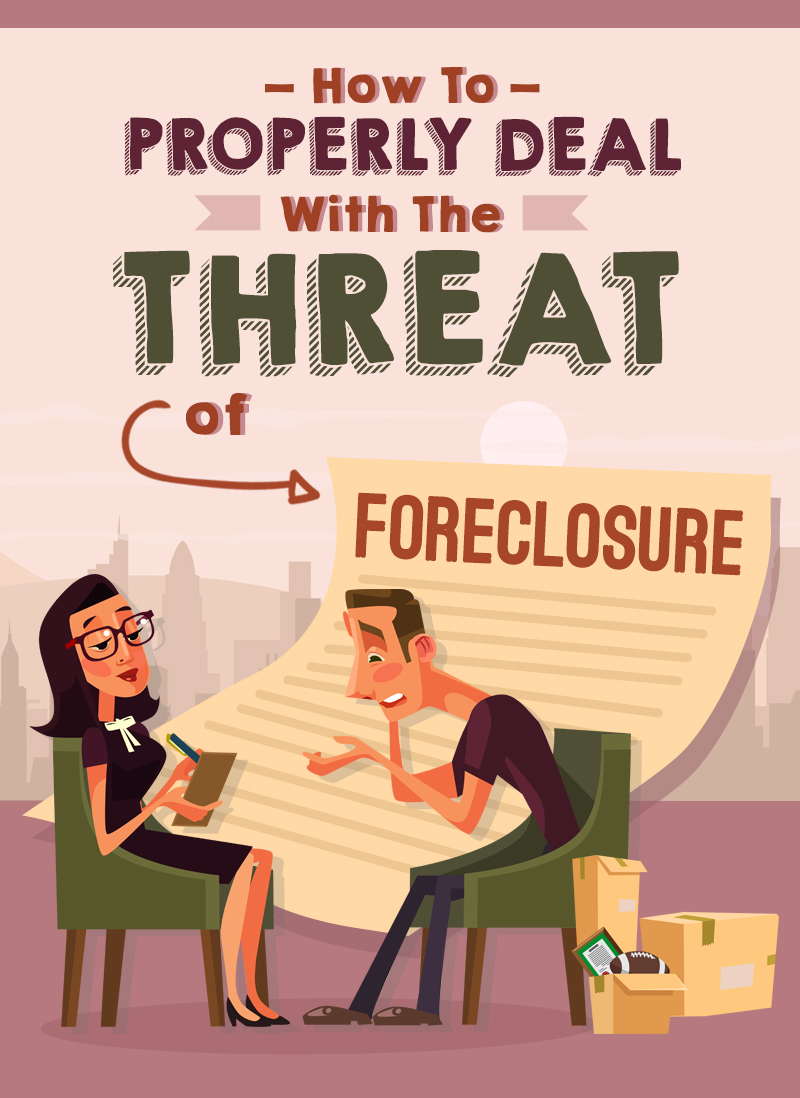
The prospect of losing your home to foreclosure can be heartbreaking, and dealing with it can be equally devastating for you and your family. After all, when the bank decides to foreclose on your home, your credit report may be permanently stained -- leaving your financial future scarily uncertain. On top of this, you will be challenged to find a new home and make necessary lifestyle adjustments.
Given the overwhelming amount of work it entails, dealing with a foreclosure can be a grueling endeavor for a lot of homeowners. However, rising above this situation is perfectly possible if you have the right information.
Most people fall into the trap of believing that nothing can be done after your mortgage goes into default. But is important to note that a default status is not a death sentence. Reports show that a large number of homes are saved even after the dreaded default status, with very minimal damage done to the homeowners’ credit.
In short, THERE IS HOPE!
Here are few things you have to know before blindly surrendering to the proceedings:
1) Know your rights.
When your home is a candidate for foreclosure, a sufficient understanding of your rights will be a crucial tool in keeping your home, or at the very least limiting the damage done to your credit and overall financial health.
More often than not, you can negotiate with the bank for a modification in your loan. Assuming that your main goal is to keep your house, a small hit on your credit file should be acceptable.
Lenders are also required to follow state laws, and most states require a written notice of default given to the homeowner. The notice should stipulate a certain amount of time for the homeowner to make good on his or her late payments. This means coming up with a plan to gradually settle all amounts due, including interest, penalties, and any other charges allowed by the law or the mortgage.
2) Understand that the banks are not after your home.
It may appear that the banks are working against you in order to get a hold of your home, but this is definitely not the case. The opposite actually holds true, as most banks do not like dealing with such situations. Lenders are in the business of making money through lending--not by reselling foreclosures.
It is in their best interests to keep you in your house, as long as you are willing to remedy the situation within a certain amount of time. Foreclosure is their last resort as much as it is yours.
3) You have to pay for your entire mortgage in order to keep your home.
The default status notification is a tool to communicate urgency--and will most likely include a requirement along the lines of you having to pay your mortgage in full. It is important to be aware, though, that this “acceleration clause” does not imply that you are not allowed to negotiate. Again, when you are willing to cooperate as a homeowner to get your mortgage back in good standing, the lender is most likely to take you up on your offer as long as it is law-abiding and reasonable.
Important note:
If you firmly believe that there has been a mistake (i.e. the amount that the bank/lender is claiming is inaccurate), and that you shouldn’t be receiving a default notice, you are allowed to clearly explain in writing why you think the lender is mistaken. Back your claim with the necessary documents that can prove your stand. Even if the explanation is not accepted, you still have the right to go to court along with your evidence. When it comes to this, the documentation you sent to the lender will be a very useful tool.