We may have been cooking more at home ever since the COVID-19 pandemic hit, but the days leading to the Thanksgiving holiday are when most of us will spend the entire day in the kitchen preparing and cooking everything—from the glorious turkey, to potatoes, pumpkin pies, and any other side dishes and desserts that's part of our traditional feast.
While our gatherings might be scaling back this year due to health restrictions, we will still prepare and cook for our Thanksgiving dinner. And safety is still more important than ever, especially when it comes to kitchen fires. According to the National Fire Protection Association, cooking is the leading cause of residential fires in the U.S., with over 1,600 home cooking fire incidents on Thanksgiving Day in 2019.
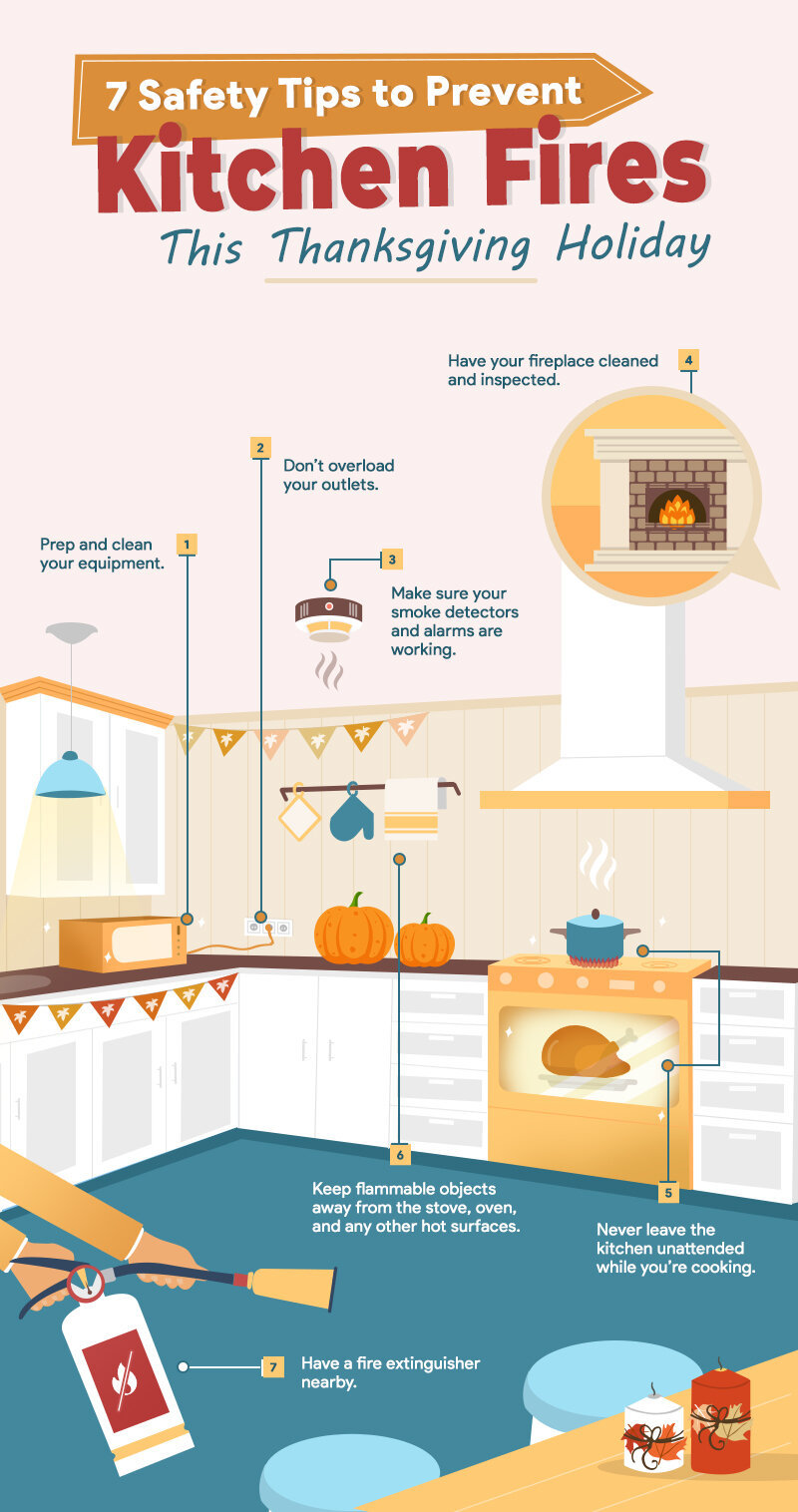
Here are some important reminders to help protect your family and your property from kitchen fires:
1. Prep and clean your equipment.

Before you get excited about preparing any part of your Thanksgiving dinner, deep clean your oven, cooking appliances, and other equipment so they'll be free of crumbs or grease, especially if you’ve been cooking frequently. Also, make sure they are in good working condition before you use them.
2. Don't overload your outlets.

Overloading wall outlets or power strips, especially if you're using all of your kitchen appliances at once, is another recipe for electrical fire. The NFPA recommends using only one cord per receptacle outlet, so make sure you space things out. Also, look out for any frayed cords or bare wires, which could also present a fire hazard.
3. Make sure your smoke detectors and alarms are working.

Before you turn on the stove to boil the potatoes or fire up the oven to bake some of the pies, check all of your smoke detectors and alarms, even those not near the kitchen. Test each device and replace the batteries of those that are no longer working properly. By ensuring your smoke alarms are working properly, any potential fire hazard can be caught before flames break out.
4. Have your fireplace cleaned and inspected.

If you haven't done it yet, have your chimney cleaned to avoid any buildup that could cause fire when you light it up. Also, make sure you don’t keep anything flammable anywhere near the fireplace.
5. Never leave the kitchen unattended while you're cooking.

Unattended cooking was cited by the NFPA as the leading cause of cooking fires and injuries. And because most cooking fires involve the kitchen stove, it's critical to never leave the kitchen while you’re cooking, especially if you’re frying or grilling food. If you are roasting, simmering, or baking something which could take quite some time, make sure to stay in the home, check on it frequently, and use a kitchen timer to keep track of the cooking time.
6. Keep flammable objects away from the stove, oven, and any other hot surfaces.

Keep any items that can easily catch fire—oven mitts, potholders, wooden utensils, hand towels, curtains, food packaging, etc—away from the stovetop, oven, or any other hot surfaces (including the area around the fireplace).
If you are using candles to add ambiance to your table setting, remember to keep them away from flammable objects, kids and pets at all times, and never leave them unattended.
7. Have a fire extinguisher nearby.

Store the fire extinguisher in a place that's easily accessible in the kitchen and/or dining area, but still far away from potential fire hazards. This way, you can easily reach them out in case a grease splatters on a hot burner or a candle was accidentally knocked over. Make sure you know how to properly use one and read the instructions and safety labels. Also, confirm the fire extinguisher’s expiration date so you’re guaranteed it’s not yet expired before starting your preparations for this year’s Thanksgiving menu.
Happy Thanksgiving!